
 Master CAWEB
 World Usability Day 2025: Designing the human experience in the age of emerging technologies
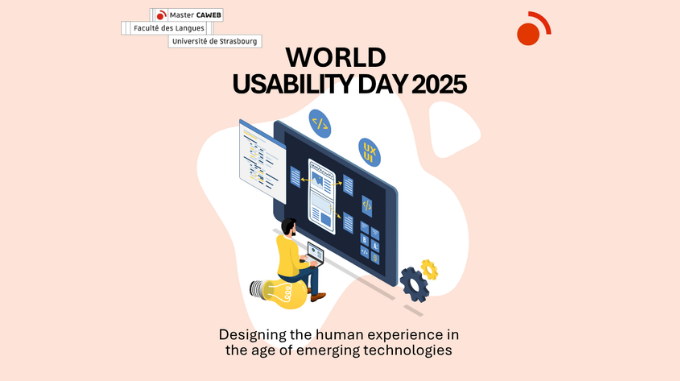
What Is World Usability Day?
Every year on the second Thursday of November, the global UX community celebrates World Usability Day (WUD). A day to reflect on how design impacts human life. Launched in 2005 by the User Experience Professionals Association (UXPA), WUD unites designers, researchers and technologists under a common goal: to make the world easier, safer and more enjoyable to use.
It’s not just a day, it’s a movement to ensure that technology works for everyone.
2025 Theme: “Emerging Technologies and the Human Experience”
In 2025, WUD explores how artificial intelligence (AI), augmented reality (AR), virtual reality (VR) and immersive systems are reshaping human interaction. These innovations do not only evolutionize the way we interact with technology, and core principles of Usability, they also challenge our definitions of trust, privacy and empathy.
Emerging technologies have the potential to enhance accessibility, amplify creativity and support sustainability through innovations like energy-efficient data centers and smart resource management systems. Yet, they also raise new ethical questions:
- Who controls the data behind these systems?
- How can we maintain human connection in virtual environments?
- Can technology remain inclusive when it becomes autonomous?
At the core, this year’s theme reminds us that the best design is still human-centered. Technology should adapt to people, not the other way around.
Looking Ahead: Usability in 2026
By 2026, we’re entering the era of agentic AI with interfaces undertaking actions rather than simply delivering content based on an input. These systems will plan, decide and execute tasks autonomously. Think of:
- Notion AI organizing your entire workflow proactively.
- Perplexity Pro summarizing research before you ask for it, instantly giving insights from multiple credible sources for faster, smarter understanding
- Runway ML and Sora generating full videos from one prompt
- Spatial computing merging physical and digital spaces using tools like Apple Vision Pro and HoloLens to enable immersive work and learning.
While these experiences promise efficiency, they also demand greater clarity, control and accountability. Designers must ensure users can always understand:
“Why did the system do this, and can I change it?”
The future of usability will blend ethics, trust and sustainability into a holistic vision of human-centered innovation. Accessibility and inclusion will remain at the core of UX design, ensuring digital experiences serve users of all cultures and abilities such as neurodivergent users. As artificial intelligence becomes increasingly energy-intensive, designers will also prioritize environmental responsibility — building low-energy systems and optimizing data efficiency, to create sustainable digital products that minimize environmental impact.
How to Ensure “Universal Usability”
To make emerging technologies truly usable for all:
- Design for diversity — Include users of different cultures, abilities, and digital access levels in testing.
- Prioritize transparency — Show users what data you collect, why, and how it benefits them and who or what they interact with.
- Humanize automation — Combine efficiency with empathy. Make AI-driven actions transparent and user-friendly.
- Focus on sustainable UX — Build experiences that reduce cognitive an environmental load.
CAWEB Perspective
At CAWEB, usability is more than a technical skill: it’s a mindset. Our students explore how innovation intersects with ethics, accessibility and multilingual design. As we look to 2026 and beyond, we reaffirm that emerging technologies must enhance, not erase, the human experience.
Further Reading
World Usability Day 2025 Official Site
The Importance of Inclusivity in Digital Content
UX/ UI Trends in 2026
CAWEB Master’s in Web Communication and UX Design
Next and previous articles


Other articles
-

Discover our online Master’s CAWEB Program in digital communication
-

Affordable UX Masters:Master CAWEB as the Top Choice for North Americans
-

How to communicate on social media during a pandemic crisis?
-

Why is UX design important for a website?
-

Is Twitch a new broadcasting platform worth considering?