 Master CAWEB
 CAWEB Voices: Teaching Digital Accessibility to Future User Experience (UX) Professionals
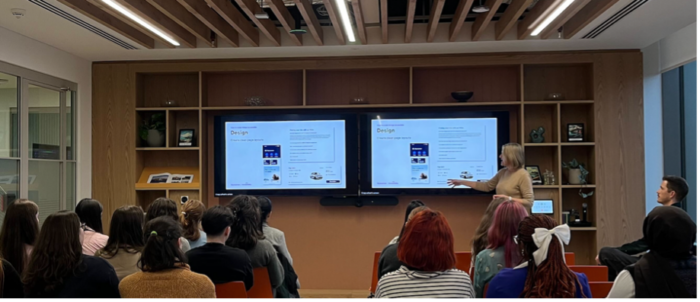
Interview with Heather Hepburn
Head of Accessibility at Skyscanner; Teach Access Europe steering committee member; Co-founder of Champions of Accessibility Network (CAN); Accessibility Instructor at Master’s CAWEB Program at the University of Strasbourg
With the European Accessibility Act (EAA) in effect across all 27 EU member states, there has never been a better time for students to learn how to design and build inclusive, accessible digital technologies. At the University of Strasbourg, located in close proximity to the EU Parliament, accessibility education comes directly from the Head of Accessibility at Skyscanner, Heather Hepburn. We interviewed our Master’s CAWEB Accessibility Instructor to learn more about her journey to equip every graduating student with the knowledge to research, design, and build a more accessible digital world.
Tell us a little about yourself
I’ve always been involved in design, latterly working as a content designer in the financial services industry. After a number of years in that role, I wanted a new challenge. I decided to interview for a similar position at the Scottish startup whose mission is “to build the most trusted travel marketplace for travelers and partners globally” – that startup was Skyscanner, now accessibly serving more than 160 million travelers every month. But back in 2018, when asked to provide a UX critique of their website during the interview for the role, I found a long list of accessibility issues. This was the beginning of my multi-year journey building an accessibility program there.
Along the way, I learned a lot about partnering with designers, developers, researchers and product managers throughout the entire product development cycle to produce accessible user experience. Many of them had never heard of digital accessibility, WCAG, or testing with users with disabilities. Looking externally for training, it quickly became clear that our work was distinct enough to require accessibility resources tailored specifically to what we were building at Skyscanner. In creating those resources, I found a deep sense of purpose in raising awareness of accessibility and sharing what I can to help make the world a more accessible place.
Give us a brief overview of the current accessibility requirements in Europe
The European Accessibility Act (EAA) is a major piece of legislation, which became effective in June of 2025. It requires many companies providing digital products or services to customers in the EU, to deliver accessible experiences to them. The EAA is very complex and includes serious implications to companies that do not meet the requirements. Often the first step for a company in scope of the EAA is to upskill its workforce to understand how to create accessible products and services, as this knowledge is severely lacking.
At Skyscanner, we teach accessibility right from the beginning. During our global induction sessions, new hires learn about the importance of accessibility, what it means, who benefits from it, and why we care about it as a business. They also take part in our Empathy Labs, where attendees experience first-hand the barriers people face in digital environments. We receive overwhelmingly positive feedback following the Lab, and we hope that our employees take their new inclusive mindset into their roles.
How did you transition from teaching employees to teaching students?
My passion for accessibility education took me outside of the walls of Skyscanner.
During an International Women’s Day event held in our Edinburgh office for students from across the UK, I gave a talk to the group about accessibility. I asked them to raise their hand if they’d heard of accessibility before, and most of them did. I then asked them to keep their hand raised if they’d learned about accessibility in their course, and only two hands stayed up. It turned out that this teaching had been in optional modules…
It then became my mission to try to close the knowledge gap and share what we already had at Skyscanner within the university programs. It started with a collaboration with the University of Edinburgh, then adding the University of St Andrews, the University of Strathclyde, and now the University of Strasbourg.
I’d long been aware of the US Teach Access initiative, but it wasn’t originally being discussed as a European option. When plans to extend that work into Europe began to form, it quickly became clear there was a real opportunity to strengthen accessibility education here. Teach Access Europe was recently launched by the US Teach Access team, led by CEO Kate Sonka, whose vision and leadership have been central to this expansion, and I joined early conversations alongside Sarah Lewthwaite as a European presence was shaped.
Teach Access Europe is very much in the early stages. We’re bringing together educators, industry, disability organizations and policymakers to embed accessibility skills into higher education across the continent. I serve on the steering committee and in the Teaching, Learning & Workforce working group, and Skyscanner is their inaugural sponsor, which I’m so proud to be able to say!
There’s a real sense of excitement about where this could lead, because building a future workforce that understands accessibility from the start is one of the most powerful ways to close the gap between the demand for accessible products and the lack of knowledge on how to create them.
Tell us more about the accessibility course you are teaching at Master’s CAWEB
This course aims to provide the theoretical bases supported by hands-on practical exercises. In the online sessions and through many supplemental resources, I provide basic introduction to accessibility, explain who benefits from it and why businesses should care about it. Next, we discuss how disabled people use technology and give students a chance to try different navigation and communication tools. We ground it in key accessibility principals and guidelines before teaching them how to carry out an accessibility audit, especially one that includes testing with disabled users. The comment I hear most often is how eye-opening this content is. Once you become aware of how others perceive, operate, and understand digital spaces, it will help you be a better designer, researcher, developer and tester in your professional career.
Any final thoughts for our Master’s CAWEB Blog readers?
My advice for students starting their careers is to be the voice of disabled users in whatever you design or build. Keep inclusion visible in every conversation and decision and involve disabled people wherever you can. Continue learning and share your knowledge to promote inclusivity in the workforce.
Additional Resources
- Visit Master’s CAWEB program at the University of Strasbourg
- If you are interested in being part of Teach Access Europe effort, read these FAQs or contact info@teachaccess.org
- Explore European Accessibility Act (EAA) to learn more about this EU directive
Next and previous articles
Other articles
-
Discover our online Master’s CAWEB Program in digital communication
-
Translation immediacy technology can unite us all in record time
-

Webinars and B2B Digital Communication: the Perfect Match
-

How AI is Empowering UX Designers Not Replacing Them
-
7 Tips for Making Your Website More Accessible